Dozens of Iranian regime officials denied entry to Canada, says border agency

Brennan MacDonald · CBC News · 

The Canada Border Services Agency has denied entry to dozens of senior Iranian regime officials and is investigating about 100 people with status in Canada for potential ties to Tehran.

The agency also has referred the cases of nine individuals with status in Canada to the Immigration and Refugee Board to determine their admissibility to Canada.

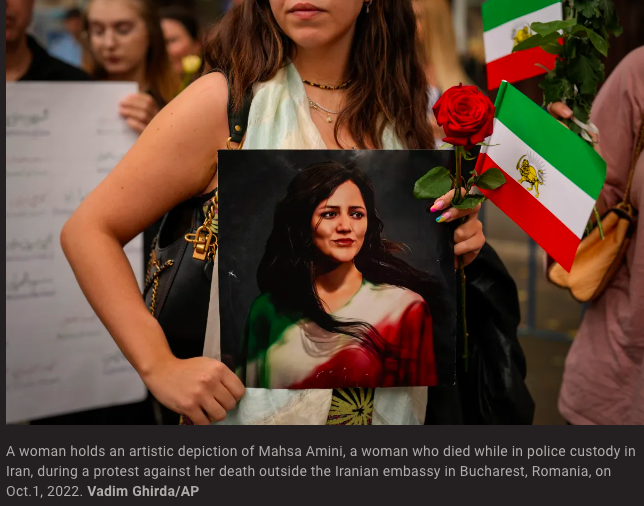
The denials at the border and the investigations stem from a measure the Liberal government adopted last year in the midst of widespread protests in Iran over the death of Mahsa Amini, a 22-year-old Kurdish-Iranian woman. Amini died while in the custody of Iran's "morality police."

The sighting of a former Tehran police chief at a Toronto-area gym in 2021 led many Iranian-Canadians to claim that Canada serves as a haven for high-ranking members of Iran's regime.

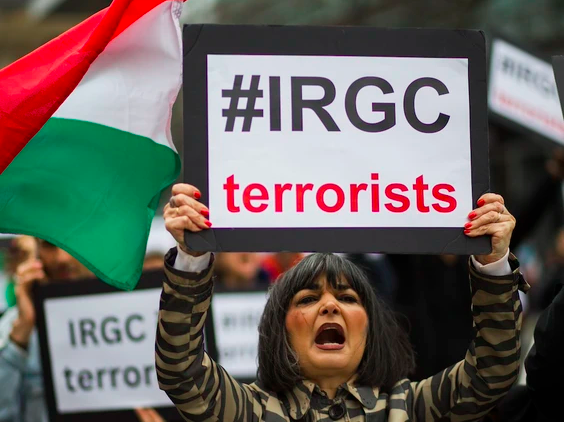
Under pressure from the opposition Conservatives and members of the Iranian-Canadian community to designate the Islamic Revolutionary Guard Corps (IRGC) a terrorist entity, the Liberal government instead opted to take action through immigration laws.

Numbers, but no names

In a statement provided to CBC News, the CBSA said that as of Nov. 20, 2023, the agency had reviewed approximately 17,800 visa applications for potential inadmissibility to Canada under the IRPA designation of the Iranian regime. As a result, 78 individuals were denied access to Canada.

The CBSA also said that, based on referrals from Immigration, Refugees and Citizenship Canada and tips from the public, it opened investigations into 141 individuals with status in Canada.

The CBSA closed 38 of those 141 cases, either because the individuals were out of the country or the border agency had determined the individuals were allowed to be in Canada.

The CBSA deemed ten individuals inadmissible under the Iranian regime's IRPA designation. Nine of those people are presently in Canada and are now facing hearings before the Immigration Refugee Board of Canada, which will decide whether their status in Canada must be revoked.

The CBSA would not identify any of the individuals under investigation or those denied access to Canada, citing the Privacy Act.

Ottawa pressed to list IRGC as a terrorist entity

"I'm glad that some people have been deemed inadmissible because it had not been clear to me that the government had taken any steps," said Kaveh Shahrooz, a human rights activist, lawyer and senior fellow at the Macdonald-Laurier Institute.

"I think any member of the IRGC that willingly served — not conscripts, but willingly served — should be kicked out of the country. But ultimately, it doesn't take away from our goal of making the entirety of the IRGC a terrorist organization."

The government has faced pressure for years to list the IRGC as a terrorist organization. Those calls intensified after the IRGC shot down Ukraine International Airlines flight PS752 in 2020, killing all 176 people onboard, including 55 Canadians and 30 permanent residents.

In the wake of Hamas's October 7 attack on Israel, which killed an estimated 1,200 people, Conservative Leader Pierre Poilievre renewed his calls for Prime Minister Justin Trudeau to list the IRGC as a terrorist entity.

Hamas, a listed terrorist entity in Canada, is a member of the so-called "Axis of Resistance" — a Tehran-backed alliance of militant groups in the Middle East which oppose both Israel and the United States.

Trudeau has resisted calls to list the IRGC and has pointed to his government's decision to designate Iran's Quds force a terrorist entity in 2017. The Quds force is a branch of the IRGC responsible for the paramilitary force's extraterritorial operations.

The government has argued in the past that listing the IRGC as a terrorist entity would be a blunt-force approach that could target low-level people who were forced to serve in the paramilitary force.

The Council on Foreign Relations, a U.S.-based independent think-tank, identifies the Quds force as Iran's main point of contact with axis members, providing them with "training, weaponry and funds to promote Iranian regional objectives."

 Leah West, an associate professor at Carleton University who teaches national security law, said listing the IRGC as a terrorist organization would be a largely symbolic gesture that might run counter to Canadian law.

"The Criminal Code basically has a carve-out for the definition of terrorist activity that excludes military units or parties to an armed conflict," West told CBC News.

"The terrorist entity listing is dependent on that terrorist activity definition. So, essentially, if the Quds force arguably shouldn't have been listed because of that definition, it makes it even harder to list an entire military for that reason — at least lawfully."

"My personal opinion is we shouldn't be sacrificing our commitment to our own domestic law in order to make what is really a political statement. It will have very little actual impact in terms of effect ... It's just not a useful tool," added West.


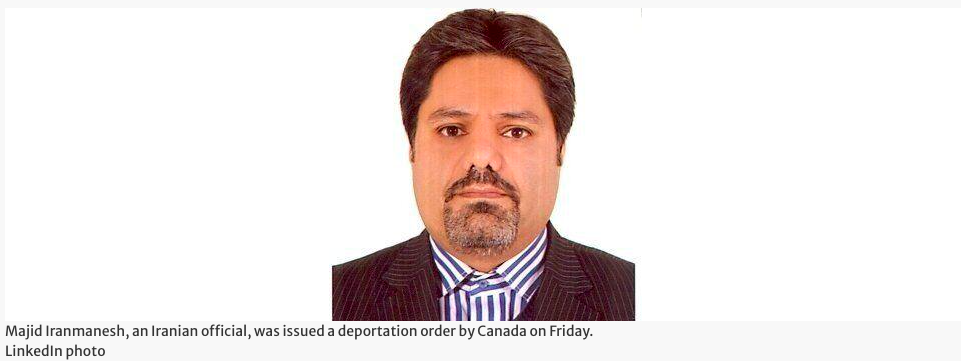
Senior Iranian official caught in Toronto

US and Qatar Will Hold Off Giving Iran $6 Billion in Funds

  • Money was to be distributed under prisoner exchange agreement
  • Iran says there’s been no change in its access to funds

Israel-Hamas war: What is Iran's role?

Youhanna Najdi | Benjamin Restle

Tehran has backed Islamist groups opposing Israel for years. While it says Palestinians "have the right to resist," it has denied any direct involvement in the recent Hamas attacks.

Following Saturday's terror attacks on Israel by Islamist militant group Hamas from the Gaza Strip, several Israeli officials have said they suspect the involvement of Iran, which is a known supporter of Israel-opposed militant groups in the Middle East.

In an interview with CBS News in the United States , Israel's ambassador to the US, Michael Herzog, said Israel's leadership suspected "Iranian hands behind the scenes."

"Hamas and Iran are closely tied. Iran provides material support, funding [and] weapons to Hamas," he said.

Israel's ambassador to the United Nations, Gilad Erdan, said that Iranian President Ebrahim Raisi met with Hamas leaders several weeks ago. "We know that there were meetings in Syria, in Lebanon," Erdan said.

"It's easy to understand that they tried to coordinate the military, the terror armies, the terrorists, the proxies of Iran in our region. They try to be coordinated as much as possible with Iran because, for the long term, the goal is to try and destroy Israel with the nuclear umbrella that Iran will provide them with."

On Thursday, German Chancellor Olaf Scholz echoed this suspicion, telling legislators Iran had allowed Hamas to grow strong enough to the launch the latest attacks. While Scholz said there was "no firm proof that Iran operationally supported this cowardly attack, it is clear to us all that without Iranian support, Hamas would never have been able to launch this unprecedented attack."

Scholz also warned Lebanon's Iran-backed militant group Hezbollah against attacking Israel, saying this would further escalate the conflict.


What did Iran say?

Tehran has denied being involved in last weekend's attacks, which it has referred to as an act of "self-defense" by Palestinians. The Israeli government on Sunday declared it was at war with Hamas. Israel's death toll rose to an estimated 1,300 as of Thursday morning and dozens of hostages have been abducted. The death toll in Gaza has risen to 1,200, according to the Palestinian Health Ministry.

"Iran supports the legitimate defense of the Palestinian nation," Raisi said in a statement broadcast on Iranian state television while praising "resistance" efforts by Hamas.

Iran backs a broad network of militias and armed groups in the Middle East, including Palestinian groups, as Tehran continually seeks to consolidate its influence in Lebanon, SyriaIraq and Yemen, as well as Gaza.

Iranian authorities consistently emphasize the term "axis of resistance" in their speeches and stances on Israel. This phrase denotes explicitly militant groups that have dedicated themselves to opposing Israel's right to exist and primarily includes Hamas and Lebanon-based Hezbollah. Both Hamas and Hezbollah's military wing are considered terrorist groups by several countries, including the US and the European Union.

Iranian officials hold regular meetings with these groups. In August, Iranian Foreign Minister Hossein Amir-Abdollahian met in Beirut with the heads of Hamas, the Palestinian Islamic Jihad, and other anti-Israel groups active in Lebanon. During this meeting, the foreign minister reaffirmed Iran's unwavering support for the "axis of resistance."

Both Hamas and Hezbollah officials have consistently acknowledged the substantial support they receive from Iran. For instance, Mahmoud al-Zahar, a senior member of the Hamas leadership, said in December 2020 that he had received approximately $22 million (€21.6 million) in cash during a meeting with Qassem Soleimani, the former commander of the Revolutionary Guards' Quds Force, in 2006.

Hassan Nasrallah, the leader of Hezbollah, has repeatedly affirmed that the group receives financial support, weaponry, and missiles from Iran. For instance, during the summer of 2016, he said, "As long as Iran has money, we have money. No law can prevent receiving this aid."

A 2021 report from the Wilson Center, a US-based think tank, says that since at least 2006, Iran has been "focused on supplying its regional allies and proxies, including Palestinian factions, with the knowhow and equipment to produce rockets locally."

The report cites an interview with the commander of Iran's Revolutionary Guards' Aerospace Force, Amir Ali Hajizadeh, as saying, "Instead of giving them a fish or teaching them to catch a fish, we taught our allies and friends how to make a hook, and they are now in possession of missile capabilities and technologies."

Iran opposes Israel's budding ties with Arab countries

The Hamas attack also comes amid negotiations over diplomatic normalization between Saudi Arabia and Israel, which Iran opposes.

In a recent interview, Mohammed bin Salman, the Crown Prince of Saudi Arabia, mentioned that his country is "gradually progressing towards normalizing relations with Israel."

The Abraham Accords, signed in August 2020 by Israel, the United Arab Emirates and the United States, led to the normalization of relations between some Arab countries and Israel. However, Iran strongly opposes this approach taken by Arab nations.

On October 3, just four days before Hamas launched its attack on Israel, Ali Khamenei, the supreme leader of the Islamic Republic, characterized the establishment of relations with Israel as a "completely futile endeavor."

On Wednesday, Iranian President Raisi and Saudi Arabia's de facto ruler Saudi Crown Prince Mohammed bin Salman discussed the ongoing situation, with the Saudi leader affirming "the kingdom's firm position towards supporting the Palestinian cause."

And more recently, Raisi and his Syrian counterpart Bashar Assad urged Islamic countries to unite over the Palestinian cause. Raisi reportedly told an Iranian news agency, "Islamic and Arab countries as well all free people of the world" must together side against Israel and back the "oppressed Palestinian people."

Iran avoids direct involvement

A report published Sunday by The Wall Street Journal quoted unnamed officials from Hamas as saying Iran's Islamic Revolutionary Guard Corps helped plan Saturday's multi-pronged surprise attack on Israel.

However, on Monday, Israel Defense Forces spokesperson Daniel Hagari said, "Iran is a major player, but we can't yet say if it was involved in the planning or training."

Iran has denied it played a role in the attacks. 

On Wednesday, The New York Times reported that US intelligence indicates key Iranian leaders were in fact surprised by the recent Hamas assault.

Raz Zimmt, an expert on Iran at the Institute for National Security Studies (INSS) at Tel Aviv University, responded to the claims made in the The Wall Street Journal article on X, formerly Twitter.

"While there is no doubt about the military cooperation between Iran and Hamas and Iran's increasing involvement in the Palestinian arena, including the West Bank, in recent years, I highly doubt whether Iran was significantly involved in Hamas's latest action," he wrote.

However, he added that if the "Israeli response poses a significant challenge to Hamas," it would "oblige Iran to move from the phase of ongoing support and coordination to a more direct involvement." 

Israeli Prime Minister Benjamin Netanyahu has already said Israel is "at war" with Hamas and vowed severe retaliation for the attacks. On Monday, Netanyahu said Israel's response to the Hamas attacks would "change the Middle East."

UN ambassador Erdan called the attacks "Israel's 9/11," after which "nothing will be the same."

Damon Golriz, a lecturer and researcher at the Hague University in the Netherlands, told DW that by maintaining a well-crafted doctrine of plausible deniability, Tehran has effectively avoided direct involvement in these conflicts. He added that finding a smoking gun implicating Iran is a political decision that would have devastating consequences.

"It will be a declaration of war between Israel and Iran," he said.

https://www.dw.com/en/israel-hamas-war-what-is-irans-role/a-67043337

Israeli diplomat draws ‘clear link’ to Iran in Hamas attacks

“There is direct involvement in what is happening right now,” ambassador-designate to Canada tells POLITICO.

OTTAWA, Ont. — Israel’s ambassador-designate to Canada says he believes Iran was involved in the weekend’s deadly Hamas rampage on Israel.

“It’s clear that there is direct involvement in what is happening right now,” Iddo Moed told POLITICO on Tuesday.

Secretary of State Antony Blinken has said the U.S. has yet to see evidence. French President Emmanuel Macron told reporters Tuesday that he’d seen “no formal trace” that Iran was directly involved. The Israel Defense Forces said Iran’s involvement can’t be ruled out despite the lack of proof.

 Asked for evidence, Moed pointed to August meetings that took place in Beirut between the heads of Iran’s Islamic Revolutionary Guard’s Al-Quds Force, Palestinian Islamic Jihad, Hezbollah and Hamas.

“With the presence of the Iranian minister of foreign affairs, then you see there is a clear link,” he said.

Iran’s response to the surprise onslaught is another sign of Iran’s backing, he added. “The praise that they received from Tehran, from the highest leadership — from President [Ebrahim] Raisi and others — the cheers in the streets, all of that points to very clear support — material and moral support and political support — for Hamas and Palestinian organizations.”

“As I stand here today, while Iran plays this broad role — sustained, deep and dark role in providing all of this support and capabilities to Hamas — in terms of this particular gruesome attack on Oct. 7, we don’t currently have that information,” Sullivan told reporters.

Blinken is expected to travel to Israel on Thursday.

Moed, a cybersecurity expert who previously served as deputy head of Israel’s foreign ministry’s African affairs division, has been on the job for six weeks in Ottawa. The ambassador-designate has yet to present his credentials to Canada’s governor general, a technicality that bars him from making direct contact with politicians until after a formal ceremony.

Asked about Israel’s short-term needs from Ottawa, Moed said it needs political and moral support in the fight against terrorism, “specifically against Hamas, the Palestinian Islamic Jihad.”

He added: “And, of course, looking at Iran as a player that is behind these attacks as a source for further escalation in the region.”

https://www.politico.com/news/2023/10/11/israeli-diplomat-draws-clear-link-to-iran-in-hamas-attacks-00120915

Poilievre calls for 'more severe sanctions' on Iran in response to Hamas attacks

Ottawa must 'take action to counter Hamas any way we can,' the Conservative leader said

US Sanctions Chinese Companies, Turkish Entities Over Iran Drones

Daniel FlatleyBloomberg News

(Bloomberg) -- The US sanctioned Chinese, Russian, Turkish and Iranian companies and people for playing a role in Iran’s drone program a day after five Americans were freed in a prisoner-swap deal with the country.

The Treasury Department added Chinese company Shenzhen Jiasibo Technology Co. Ltd. and its managing director and owner Su Chunpeng to its sanctions list on Tuesday, accusing them of helping a previously designated Iranian supplier of unmanned aerial vehicles acquire parts for radar altimeter systems. Treasury also designated China-based Dong Wenbo for helping to sell aircraft brake disks to the Iranian company.

“The United States will continue to take action against Iran’s UAV procurement networks, and encourages jurisdictions to exercise the due diligence necessary to prevent the export of these components to Iran,” Brian Nelson, the Treasury undersecretary for Terrorism and Financial Intelligence, said in a statement.

The US and European Union have accused Iran of supplying Russia with drones for its war in Ukraine.

The move comes shortly after the Biden administration oversaw the completion of a deal with the Iranian government to release five Iranians held in US custody in exchange for the same number of US citizens. The deal also included the unfreezing of $6 billion in oil revenue held at South Korean banks due to sanctions. 

Earlier: Five Americans Freed in Iran Prisoner Swap Land in Qatar 

Two Turkey-based money exchangers — Mehmet Tokdemir and Alaaddin Aykut — were also designated on Tuesday, along with three Russian aerospace companies. The US said a previously sanctioned Iranian drone company, Iran Aircraft Manufacturing Industrial Company, or HESA, was using the name Shahin Co. in an attempt to evade sanctions, and added that name to its designation. 

©2023 Bloomberg L.P.

Canada sanctions Iran's new national security chief, six drone executives

By The Canadian Press

OTTAWA — Canada is sanctioning Iran’s new security chief, alongside six Iranians accused of destabilizing the Middle East and Ukraine.

Ali Akbar Ahmadian, a former commander of the navy division of the Islamic Revolutionary Guard Corps, became chair of Iran’s Supreme National Security Council in May.

Others facing new Canadian sanctions include executives in Iran’s drone industry and aviation sector who are accused of helping sow chaos in Iran’s neighbourhood and supporting Russia’s invasion of Ukraine.

Foreign Affairs Minister Mélanie Joly says the new sanctions aim to keep Ottawa in line with European and American allies, so people facing sanctions don’t see Canada as a safe haven for their assets.

This is the federal government’s 13th round of sanctions against Iranian officials, which aim to prevent them from entering Canada and freeze any assets they hold in the country. 

Critics have said it’s impossible to tell whether Ottawa’s sanctions are having their intended effect, with experts testifying in Parliament that Canada does a poor job of tracking its efforts.

This report by The Canadian Press was first published Aug. 8, 2023.

The Canadian Press

The Canadian businessmen accused of helping Iran's regime

The FBI says they conspired to evade U.S. sanctions on Tehran. These men call those allegations ‘baseless.’

They’re wanted by the FBI in the U.S., accused of helping to disguise hundreds of millions of dollars on Iran’s behalf to evade American sanctions.

In Canada, they’re active businessmen advertising themselves as flourishing leaders in the world of real estate.

Salim Henareh promotes himself on his personal website as the CEO of a private mortgage corporation in Toronto and a “top name in his industry.”

Khalil Henareh (the FBI believes he’s related to Salim) presents himself on social media as an award-winning real estate broker based in Thornhill, Ont.

Saeed (Sam) Torab Abtahi is listed as VP of a private lending company tied to Salim Henareh, according to the company’s website.

They are not accused of violating sanctions in Canada or of any illegal acts here. But all three men face felony charges in the U.S. and up to 20 years in prison if they’re convicted.

Their criminal defence lawyer Barry Fox says the American allegations are “baseless.”

But Garry Clement, a former RCMP superintendent who managed the national police force’s financial crime program, reviewed the U.S. indictment and said it appears to be a “classic example” of Canada acting as a “safe haven.”

“It appears they’re operating with virtual impunity right now,” said Clement. “There doesn’t seem to be a concentrated enforcement action of any kind in this country.”

Prime Minister Justin Trudeau has vowed that Canada will no longer act as a safe haven for people benefiting from “the corrupt and horrific regime in Iran.”

An indictment allows charges to proceed; it is not a conviction.

A grand jury in California concluded there was enough evidence in April, 2021 to indict Salim Henareh, Khalil Henareh and Saeed Torab Abtahi for conspiring with at least seven other people to evade U.S. sanctions and disguise transactions on the Iranian regime’s behalf worth more than $750 million US.

The U.S. indictment alleges the sanctions evasion scheme lasted at least from 2002 to 2018 and involved Canadian money service businesses and front companies abroad.

Among other things, the indictment alleges those companies helped to disguise the purchase of two oil tankers worth more than $51 million US on Tehran’s behalf.


Court documents tied to the case claim Iran uses front and shell companies to exploit financial systems around the world and transfer money to support terrorist groups, human rights abuses and ballistic missile development.

Clement said he hopes Canadian authorities are aware of the men’s operations in Canada and that they are looking into them.

“[The U.S. indictment] says to me, look, they’re directly linked to the Iranian regime,” Clement said. “It says to me that they’re prepared to go a great distance to support the regime. And that, in my mind … creates a lot of red flags, and should for Canada.”

Fox said the three men in Canada are not affiliated with Iran’s regime in any way.

“My clients categorically deny having any relationship, personal or corporate, with the Iranian government … the allegations contained in the complaint are without merit,” said Fox in an email.

Fox declined CBC News’ requests for interviews, saying they would have to wait until the U.S. criminal case “is resolved.”

“Since the matter is still pending (although dormant) in the American courts, my clients have no choice but to refuse any form of interview at this time,” Fox wrote.

It’s been almost two years since the indictment was issued.


Salim Henareh

  • Legal name until 2002: Mohammad Salim Henarheshghsou 
  • President of Persepolis Financial Services (1999-2010)
  • President of Rosco Trading International (2008-2021)
  • U.S. accuses both Canadian money services companies of involvement in sanctions evasion scheme 
  • U.S. alleges he created front companies to purchase oil tankers on Iran’s behalf
  • Named as defendant in a handful of civil lawsuits in Ontario —  including a 2017 suit that alleged he and Rosco Trading International breached a contract over issues with a series of wire transfers. The defendants denied any involvement and said it was the plaintiff’s fault.
(Sources: Provincial business records, property records, U.S. court documents, Ontario civil court documents)

Saeed (Sam) Torab Abtahi

  • VP of Rosco Trading International in Toronto 
  • Accused of discussing how to evade U.S. sanctions on Iran by disguising U.S. fund transfers on behalf of Iranian oil companies through front companies and fraudulent invoices
  • 2012 civil lawsuit alleged that Abtahi, Salim Henareh, Rosco Trading International, Persepolis and others “unlawfully and intentionally” converted $1 million of the plaintiff’s money for their own benefit and only paid back $100,000. Court issued a default judgment that was later set aside.
  • Judged a Miss Universe Canada pageant in 2015
  • Studied at McGill University and held senior management positions at Ontario pizza franchises
(Sources: U.S. court records, Miss Universe Canada website, Ontario civil court records)

Khalil Henareh

  • Compliance and operations employee at Rosco Trading International in Toronto
  • Former information and technology and operations manager for Persepolis Financial Investments before it ceased operations
  • Accused of creating front companies and fraudulent invoices that caused U.S. dollar wire transfers to be processed by U.S. banks on behalf of Iranian oil companies
  • U.S. claims he operated some of the websites involved in the alleged sanctions evasion scheme, including one for an Iranian currency exchange business in Tehran
  • Majored in computer science at the University of Toronto
  • Personal website registered to the same hosting site’s address in Arizona as the Lender for Growth and Rosmount Capital Funding websites
(Sources: Khalil Henareh’s website, U.S. court records, Whois domain lookup)
https://www.cbc.ca/newsinteractives/features/iran-sanctions-canada-businessmen#:~:text=The%20Canadian%20businessmen%20accused%20of%20helping%20Iran%27s%20regime

Indictment and Guilty Plea Entered in Iranian Export Case

Department of Justice
U.S. Attorney’s Office
District of Columbia


WASHINGTON – A U.K. man pleaded guilty Tuesday in federal court in the District of Columbia to violations of the International Emergency Economic Powers Act (IEEPA) and Iranian Transactions and Sanctions Regulations. At the same time, an indictment was unsealed charging four individuals with the same offense, as well as related offenses.

According to his plea, Saber Fakih, 46, of the United Kingdom, conspired with Bader Fakih, 41, of Canada, Altaf Faquih, 70, of the United Arab Emirates, and Alireza Taghavi, 46, of Iran, to export and attempt to export an Industrial Microwave System (IMS) and counter-drone system from the United States to Iran, without first obtaining the requisite license from the Department of Treasury’s Office of Foreign Assets Control (OFAC). Fakih pleaded guilty to count two of the indictment.

 “Fakih and his coconspirators attempted to evade U.S. sanctions and obtain highly sensitive pieces of equipment for Iran from unwitting U.S. suppliers,” said Assistant Attorney General Matthew G. Olsen of the Justice Department’s National Security Division. “In doing so, Fakih jeopardized not only U.S. national security, but the national security of any other nation Iran decides to target. The Department of Justice can and will act to disrupt and prosecute such criminal conduct.”

  “This indictment and guilty plea demonstrate the United States’ commitment to preventing U.S. technology with military applications from falling into the hands of the Iranian government, and it demonstrates the effective results generated by the partnership between DOJ, the FBI, the Department of Homeland Security, and the Department of Commerce,” said U.S. Attorney Matthew M. Graves, for the District of Columbia.

 “This investigation illustrates that our adversaries are willing to utilize complicated procurement networks and blatantly disregard U.S. export control laws to acquire sensitive dual use items for potential military purposes, such as counter drone technology, industrial microwave systems, and directed-energy systems that would undermine U.S. national security,” said Special Agent in Charge Nasir Khan of the U.S. Department of Commerce Office of Export Enforcement, Washington Field Office. “The Office of Export Enforcement and our partner agencies will aggressively target and dismantle those illicit networks that seek technological advantages that can be used against us.”

“Mr. Fakih’s guilty plea shows the lengths he went to in order to attempt to procure U.S. technology with military uses, it also shows the lengths the FBI and our federal partners will go to in order to stop these technologies and materials from getting into the wrong hands,” said Special Agent in Charge Thomas J. Sobocinski, of the FBI Baltimore Field Office. “Those who are working domestically and abroad to undermine American interests will be held accountable.”

“The FBI remains committed to protecting U.S. technology and ensuring it does not fall into the hands of anyone intending to use it for harm,” said Assistant Director Alan E. Kohler Jr of the FBI's Counterintelligence Division. “For over 40 years, Iran has continuously attempted to obtain sanctioned items that could be used against Americans or our allies. This indictment of Fakih and his coconspirators sends a clear message: The FBI, along with its federal partners, will persist in thwarting these attempts and do its part to keep our democracy safe.”

“Homeland Security Investigations (HSI) remains committed to safeguarding sensitive U.S. technology and ensuring it does not fall into the hands of our adversaries,” said Special Agent in Charge James R. Mancuso of HSI’s Baltimore Field Office. “This investigation highlights HSI’s global investigative capabilities, and we will continue to work with our federal partners to protect the safety and security of the United States.”   

 In addition, a related indictment was unsealed in the District of Columbia charging Iranian national Jalal Rohollahnejad, 44, with smuggling, wire fraud and related offenses arising from the same scheme. Rohollahnejad was previously added to the Department of Commerce’s, Bureau of Industry and Security Entity List in March 2020, for acting contrary to U.S. national security or foreign policy interests by procuring goods on behalf of a Specially Designated National (SDN).

According to the indictments, in 2017 and 2018, the co-conspirators attempted to export to Iran items that had potential civil and military uses. Potential military uses of the industrial microwave system (IMS) (with some modification) include high-power microwave based directed-energy weapon systems. The counter-drone system, which has both commercial and military uses, can be used to stop, identify, redirect, land or take total control of a target unmanned aerial vehicle.

 The indictments allege that Rohollahnejad and Taghavi hold themselves out as representatives of Rayan Roshd Asfzar, which has been linked to the Iranian Revolutionary Guards Corps (IRGC).

According to court documents, Taghavi informed Fakih that he could not purchase the IMS because he is an Iranian national. Saber Fakih then arranged the purchase of the IMS on Taghavi’s and Rohollahnejad’s behalf, knowing it was ultimately destined for Iran.

 Rohollahnejad caused the equivalent of $450,000 to be sent from Iran to the United Arab Emirates, where Altaf Faquih picked it up and converted it from Emirati currency to U.S. dollars. Faquih then transferred the money to Bader Fakih in Canada via three separate wire transfers. Bader Fakih then transferred the money to the U.S. company for the purchase of the IMS.

 In addition to the IMS, Saber Fakih and Bader Fakih conspired to purchase two counter-drone systems worth nearly $1 million on behalf of Taghavi.

 Saber Fakih faces up to 20 years of incarceration and/or a fine of $1 million for violating the IEEPA. A federal district court judge will determine any sentence after considering the U.S. Sentencing Guidelines and other statutory factors.

The case is being investigated by the FBI’s Baltimore Field Office, HSI’s Baltimore Field Office, and the Washington Field Office of the U.S. Department of Commerce.

The case is being prosecuted by the U.S. Attorney’s Office for the District of Columbia and the Department of Justice National Security Division’s Counterespionage and Export Control Section.

            An indictment is merely an allegation, and all defendants are presumed innocent until proven guilty beyond a reasonable doubt in a court of law.