
We need an International Anti-Corruption Court

Danilo Türk is the former president of Slovenia and the current president of Club de Madrid. He was recently appointed member of the U.N. Secretary-General’s High-Level Advisory Board. 

Corruption isn’t a new phenomenon.  

It’s even been argued, at times, that a certain degree of corruption may be inevitable and even healthy for the economic locomotive. In these times of heightened political scrutiny and disillusionment, however, its persistence under all manner of political systems has made it a pressing social problem that needs to be addressed head on. 

With a cost to the global economy estimated at around $2.6 trillion a year — or 5 percent of global gross domestic product — corruption comes in many forms, and no country is immune. Thus, adequately meeting the challenge will require the establishment of an international mechanism, one that acknowledges corruption isn’t just a local crime. 

Kleptocracy, or the abuse of public power for private gain by a nation’s leaders — stagnates the potential for growth and development and erodes citizens’ trust in democracy, contributing to the disconcerting rise of social polarization, which threatens the foundations of many liberal democracies both old and new. 

This plague — which respects neither borders nor laws — can bankrupt nations, governments, communities and people, destroy the environment and undermine our trust in public institutions. It’s a crime that further exacerbates inequality, poverty and social division. 

Alas, corruption is also difficult to solve, and in recent decades, most countries haven’t made much progress in this regard. Despite the fact that there are 189 parties — including 181 countries — to the United Nations Convention Against Corruption (UNCAC), which requires laws criminalizing bribery, embezzlement, money laundering and other forms of corrupt conduct, kleptocracy still thrives. And because they control the administration of justice in the countries they rule, kleptocrats enjoy impunity in too many places. 

However, thanks to the work of courageous journalists, recent major document leaks like the Pandora Papers, and earlier releases of financial records like the Panama Papers, have highlighted the enormous scale of these crimes. And though this has produced extensive evidence of corrupt transnational schemes, few of the high-level officials exposed by the reporting have faced political consequences — even fewer have faced the prospect of losing their assets and freedom. 

Citizens correctly wonder how these crimes can continue to go unpunished, while the middle classes are stagnated and tired of facing the consequences of crisis after crisis.  

So far, the impunity and transnational nature of corruption has led to a variety of calls proposing different solutions that could cross borders and enforce laws that other countries can’t — or won’t — enforce themselves. 

Along these lines, sanctions are sometimes used against corrupt leaders, and are an important short-term accountability mechanism, but they are only a political response to the problem of grand corruption. To fundamentally alter the calculations of kleptocrats and their professional enablers, the world needs a comprehensive and impartial rule of law response to the problem, which would be embodied in a new international institution — an International Anti-Corruption Court (IACC). 

The IACC could be a mechanism filling the crucial gap in the international legal framework for combating corruption and enhancing transparency in governance structures. 

Through its agreed mandate, if the country ruled by the kleptocrat is unwilling or unable to prosecute a case itself, the court should have jurisdiction to prosecute the crimes committed by kleptocrats and their transnational networks of collaborators that are already criminalized under the UNCAC. 

And as with the International Criminal Court, the IACC should have the authority to prosecute crimes committed by nationals of member countries and nationals of other countries in the territory of a member country. It should be a court of last resort with the capacity to prosecute and imprison kleptocrats and, thus, create opportunities for the democratic process to replace them with honest leaders. The court should also have — in civil as well as criminal cases — the authority to recover, repatriate and repurpose illicit assets for the victims of grand corruption. 

Since the declaration calling for the creation of the IACC was first published in June 2021, over 250 luminaries — including 43 former presidents and prime ministers and 32 Nobel Laureates — from more than 75 countries have now signed it, and the governments of Canada and the Netherlands have committed to working with international partners to establish the court. Two successive presidential administrations in Colombia and the newly elected president of Timor-Leste have also endorsed the IACC. 

I am acutely aware of, and concerned about, the enormous negative impact of grand corruption on societies, from combating climate change and pandemics to enhancing international peace and security, and the very pillars of democracy. To help remedy its devastating consequences, it’s critical that more countries join the emerging coalition committed to the creation of an IACC. 

Recognizing that creating a new international court may be a long-term endeavour, Canada, the Netherlands, Ecuador and other partners will convene a ministerial conference in late 2022 to analyze the gaps in the international legal framework for combating corruption and potential solutions. It will particularly focus on creating a receptive environment for the proposal in the international community. 

Corruption isn’t inevitable, and it’s not unstoppable. 

It does, however, require a collective commitment to the long-term efforts made to establish ambitious anti-corruption solutions at the international level. Only then can we create an effective institution that contributes to securing a more just, rules-based global order. 

The need for action has never been more pressing. Democracies have a unique mandate to take action and show that they can deliver on something as essential to their very nature as the rule of law. We all need to stand up. 

MACKAY: Canadian James Xiao is a political prisoner in China

While Canadians breathed a collective sigh of relief at the resolution of the illegal detention of ‘the two Michaels’, Mr. Kovrig and Mr. Spavor, there is another, longer-term yet less well known, arbitrary detention of a Canadian citizen in China.

Article content

Canadian businessman James Xiao was abducted from a Hong Kong hotel room by suspected Chinese Communist Party agents on Jan. 27, 2017. He has been neither seen nor heard from in public since. As of July 1, 2022, he will have been in Chinese captivity for 1,981 days – almost twice as long as the 1,019 days Canada’s two Michaels were held in captivity by the same regime. International media reports indicate Xiao’s trial is imminent.

Of course, as in all countries some people have been legitimately arrested for illegal activities in China. However, there are those where the Chinese Communist government, solely for political reasons, has arbitrarily arrested and detained people, as they did with the two Michaels. Their political reach respects no limits or any state boundaries, let alone any semblance of rule of law, human rights or full answer in defence. This is clearly shown by the kidnapping of Xiao.

Article content

It must be made clear to all that Xiao is a political prisoner, pure and simple. Just as were the two Michaels, charges, in all cases if ever they come, will be made up and false. A trial will be a show trial with certainty of conviction. There will be no true justice for Xiao, just as there was not for the two Michaels.

The Chinese Communist regime controls all aspects of the justice system, the police, courts, media and the penal system. Everyone, including political prisoners, are depicted in the darkest possible light and as the worst hardened criminals.

The case of Canadian citizen Xiao is unique because he is a powerful political pawn in the bloody war waged by President Xi Jinping against opposing political factions. He was abducted and imprisoned to scare Xi’s political opponents into silence and submission.

Article content

There is no due process as we in the West understand it. He does not enjoy consular access. He has, in effect, been detained without charge, access to consular services or any basic rights that we in the West are familiar with.

No sensible person in the public could see Xiao as anything other than a legitimate businessman and now tragic political pawn. In his case, repeating in our Western press the false narrative about him is tantamount to doing the dirty work and abetting their human rights abuses and crimes by the Communist Chinese Party.

While there are earnest efforts under way to protect Canadian institutions at home from negative foreign actors, less so for the 123 Canadians currently in Chinese custody.

To its credit, in February 2021, Canada built international support with 67 other countries for a joint declaration against arbitrary detention. It was hoped this would put China on notice that it can’t get away with the practice of arbitrary detention. However, despite this, Xiao’s unjust arrest and detention continue with an uncertain future. As with all such prisoners this is deeply troubling and difficult for his family in Canada.

Article content

Canada’s federal government could and should do so much more to protect our citizens suffering through these types of circumstances. They should appoint a special envoy or ambassador specifically to deal with Chinese political prisoners. Further, they should rally support from OECD partners like the U.S., U.K., Australia and other signatories of the Declaration to make public statements warning China.

The message should be clear that arbitrary detention isolates China not only politically but also commercially, as it will have a chilling effect on trade. Sanctions as we have seen in Russia can over time have an impact.

Arbitrary arrests like the detentions of Xiao and others are a violation of international human rights law, including Article 9 (1) of the International Covenant on Civil and Political Rights. As are the lack of access to any consular assistance which violates The Vienna Convention on Consular Relations.

Article content

In addition to its 67 global endorsers, Canada’s declaration is supported by relevant UN bodies, including the UN Human Rights Council and the UN Working Group on Arbitrary Detention, as well as by former UN secretary-general Ban Ki-moon.

Political prisoners like Xiao and the 123 others require their fellow citizens to know their story. The federal government should do everything within its power for him to get justice. Isn’t this what every Canadian citizen deserves?

The Honourable Peter MacKay PC QC served as Minister of Justice and Attorney General, Minister of National Defence, and Minister of Foreign Affairs of Canada under Prime Minister Harper, is a lawyer and active with Integrity Initiatives International.

Deadly collapse: Iranian-Canadians demonstrate against the Iranian regime

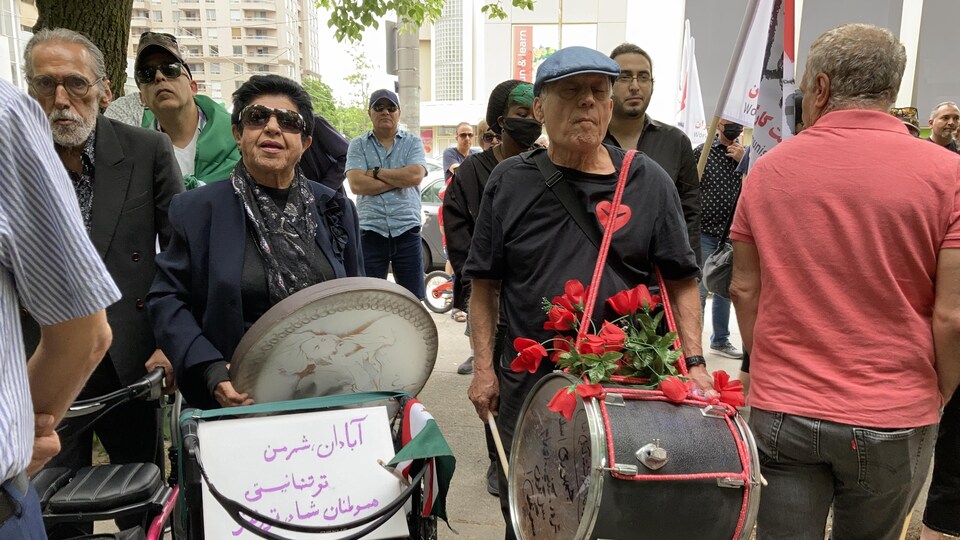
Protesters in the street.

Protesters denounced the Iranian government in Toronto on Sunday.

PHOTO: RADIO-CANADA / JAMES SPALDING

Stella Dupuy (go to the author's page)
 

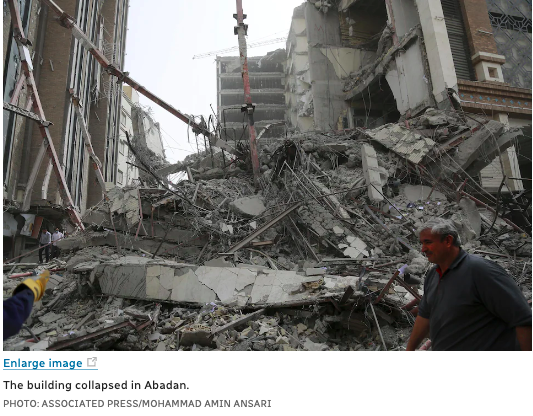
The Iranian-Canadian community is mobilizing to denounce the Iranian regime, after the collapse of a 10-storey building which killed at least thirty people in Abadan, Iran.

After a first demonstration organized on Saturday by the Democratic Association of Iran, hundreds of demonstrators gathered on Sunday at Mel Lastman Square in Toronto, this time at the invitation of various activists.

Rallies were also planned in Montreal and Vancouver.

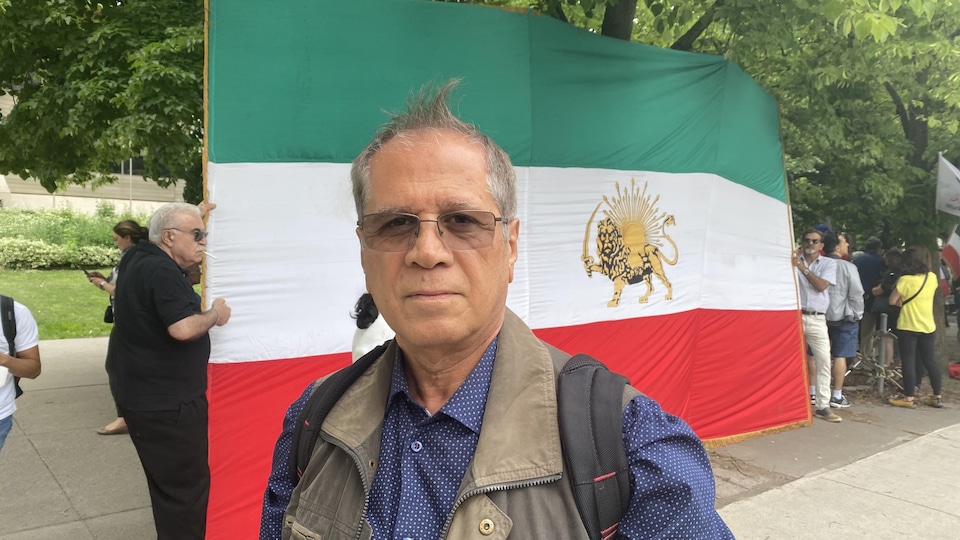
Nazila Nik was keen to participate in the Toronto demonstration.

 On doit être solidaire avec le peuple iranien et dénoncer le régime","text":"On doit être solidaire avec le peuple iranien et dénoncer le régime"}}"> We must stand in solidarity with the Iranian people and denounce the regime , she said.

A portrait of Nazila Nik.

Nazila Nik took part in the demonstration in Toronto.

PHOTO: RADIO-CANADA / STELLA DUPUY

At least 38 people died in the collapse of the Metropol Building , a 10-storey building under construction, on May 23 in Abadan, one of the main cities of the province of Khuzestan, located in the south-west of the country.

The death toll has steadily increased over the past few days as rescuers continued their search among the rubble.

Since the incident, anger has been unrelenting in the country.

Many protesters have gathered in recent weeks at the site of the collapse, and elsewhere in the country, to challenge senior Iranian officials.

They accuse their government of corruption and negligence.

The government's response is shocking

Iranian-Canadian journalist Mohammad Tajdolati was keen to join Sunday's protest in Toronto. As a journalist, he considers that he has the responsibility to tell what is currently happening in Iran.

Protesting Iranian-Canadians feel it is their responsibility to demonstrate and reflect the voices of Iranians abroad so people know what is happening there , he said.

A portrait of Mohammad Tajdolati.

Mohammad Tajdolati took part in the demonstration on Sunday.

PHOTO: RADIO-CANADA / STELLA DUPUY

In Iran, for days and nights, people were angry because the regime, the system that was responsible for this disaster, did not answer people's questions and did not take responsibility , adds the journalist, who explains that the owner of the building would be linked to stories of corruption.

Political scientist and Iranologist at the Raoul-Dandurand Chair at UQAM, Hanieh Ziaei agrees.

The population criticizes the late response. We always see a non-existent or insufficient response from the authorities to help the victims in this kind of situation , she said.

She recalls the collapse in 2017 in the center of Tehran of the Plasco Building , a 15-storey shopping center, which killed 22 people, including 16 firefighters.

But, according to her, the anger of the Iranians is not limited to the response of the authorities. She says protesters are denouncing institutionalized corruption, high inflation and currency depreciation.

A rooted anger

Mohammad Tajdolati stresses for his part that the situation is getting worse in terms of unemployment, pollution and political repression .

The region of Khuzestan is the richest region of the country because there are oil and gas wells, but for four decades, because of badly made and badly applied policies, this region has become one of the poorest people in the country ," he said.

“  People wonder why with such wealth under their feet, they have to live in catastrophic conditions.  »

— A quote from  Mohammad Tajdolati

And according to Hanieh Ziaei, the revolts will continue. The demonstrators are increasingly visible. This visibility and the occupation of public space show that the visceral fear of the riot squads and the figure of moral and religious authority is weakening in Iran. It is in loss of legitimacy , she says.

“  And in Iran, when you protest, your life is in danger. People are ready to risk their lives to denounce injustices.  »

— A quote from  Hanieh Ziaei

Ayatollah's speech

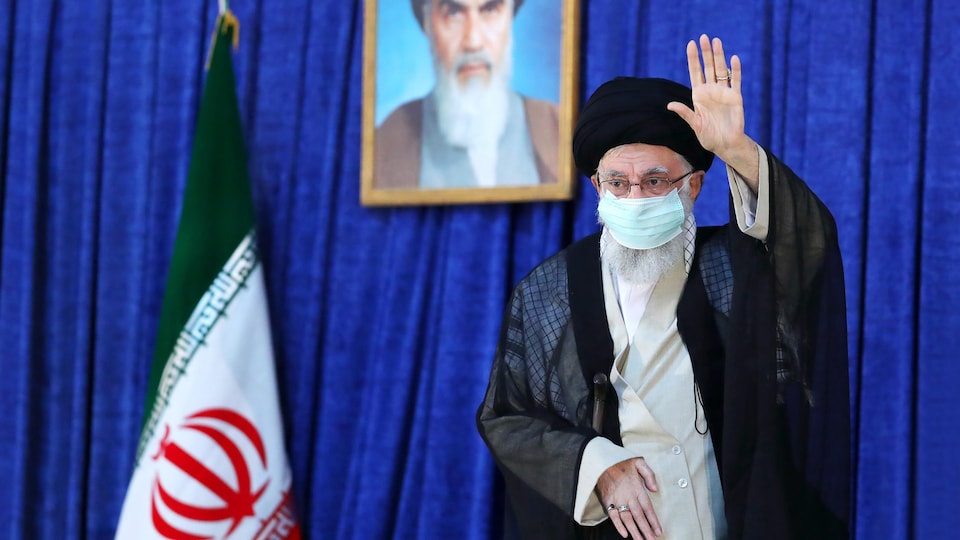
Ayatollah Ali Khamenei, Iran's Supreme Leader, spoke about the events in Abadan in a televised speech on Saturday.

Those responsible must be brought to justice, their punishment must serve as a lesson to others and similar incidents in the future must be avoided , he said.

Ayatollah Ali Khamenei wearing a mask.

Ayatollah Ali Khamenei, seen here in a photo released by the government on June 4, 2022.

PHOTO: ASSOCIATED PRESS

The Ayatollah has also blamed the recent spike in protests on Iran's enemies , including Iranians who he says are betraying the country abroad.

A response that the Toronto demonstrators did not hesitate to denounce.

According to researcher and activist Ata Hoodashtian, present at the demonstration, the Iranian authorities are in a catastrophic situation and fear an all-out insurrection .